10 Jul 2026
Matching Timed Rewards with Pattern Mastery in Hybrid Bingo Formats for Novice Participants
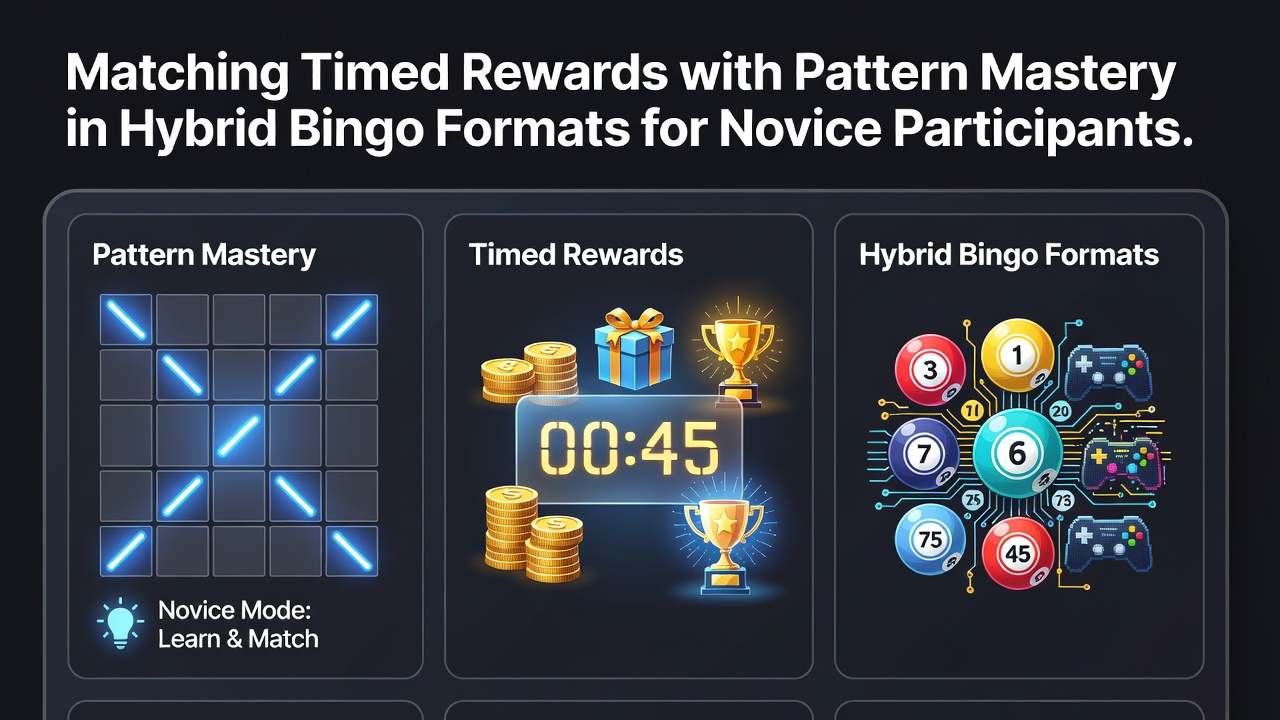
Hybrid bingo formats combine physical halls with digital platforms, allowing participants to switch between in-person sessions and app-based play within the same scheduled event. Research from industry reports shows these mixed environments use synchronized calendars that link promotional windows directly to specific pattern requirements, such as completing a blackout or four-corners sequence during defined time blocks. Data from multiple gaming jurisdictions indicates that novice players encounter these alignments through structured onboarding sequences that pair reward triggers with incremental pattern tutorials.
Hybrid Format Structures and Their Operational Patterns
Hybrid bingo operates through integrated systems where venue-based draws feed into mobile interfaces while maintaining identical number sequences across both channels. Observers note that platforms schedule these draws at fixed intervals, often aligning with regional time zones to accommodate participants in different locations. Studies conducted by academic research groups reveal that pattern complexity increases progressively within each session, starting with simple lines and advancing to shapes that require multiple card monitoring. Those who track participation metrics find that hybrid setups reduce entry barriers by providing visual overlays on digital cards that highlight emerging patterns in real time.
Regulatory data released in early 2026 from several North American oversight bodies demonstrates consistent growth in hybrid format adoption, with participation logs showing higher retention rates among users who complete initial pattern modules before entering live draws. These modules typically run parallel to timed reward periods, creating direct connections between learning milestones and bonus eligibility.
Mechanics of Timed Rewards in Multi-Channel Play
Timed rewards activate during predetermined windows that correspond to peak participation hours across both physical and digital channels. Figures from European gaming associations indicate these windows last between fifteen and forty-five minutes, during which specific patterns earn additional credits or entry into secondary draws. The alignment process works by matching reward criteria to the exact patterns being practiced in novice tutorials, so participants encounter familiar sequences while incentives remain active. Australian regulatory summaries released in mid-2026 highlight how operators adjust these windows seasonally, extending them during periods of increased community events to maintain steady engagement levels.
Platform logs collected across multiple operators show that reward notifications appear through the same interface used for pattern guidance, allowing seamless transitions between learning steps and active play. This integration ensures that novices receive immediate feedback on pattern completion within the active promotion timeframe.
Pattern Mastery Development for New Participants
Pattern mastery begins with standardized training sequences that introduce core formations such as rows, columns, and diagonals before advancing to combined shapes. Data compiled by university-led gaming studies demonstrates that repeated exposure during short, focused intervals improves recognition speed by measurable margins across tested groups. Hybrid environments support this progression by offering practice modes that mirror live draw pacing while remaining separate from actual reward cycles.
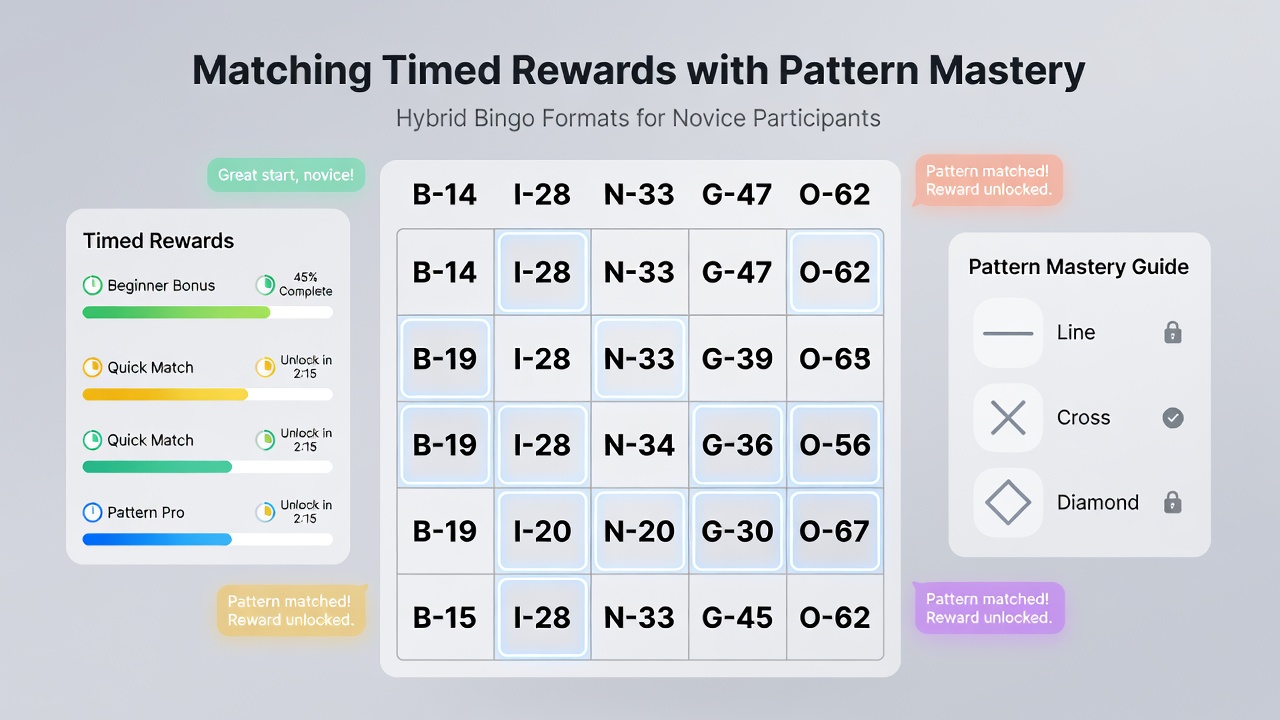
Training modules released in July 2026 by several platform providers incorporated adaptive difficulty adjustments based on individual completion rates. These adjustments link directly to reward schedules, so participants who reach proficiency thresholds unlock eligibility for the next promotional window without additional registration steps. Records from Canadian provincial gaming commissions confirm that structured pattern progression correlates with reduced dropout rates in early sessions.
Alignment Strategies Across Scheduled Events
Operators coordinate reward timing with pattern release schedules through centralized calendar systems that update across all participating channels. Evidence from trade association reports shows this coordination creates predictable cycles where novices can anticipate when specific patterns will carry bonus value. The process involves mapping tutorial content to upcoming promotions, ensuring that newly introduced formations appear during active reward periods.
Participation analytics from 2026 indicate that sessions incorporating these alignments experience higher completion rates for beginner tracks compared to unsynchronized formats. Systems track progress automatically, flagging when a participant has practiced a pattern sufficiently to enter the corresponding reward window.
Implementation Examples from Operational Data
One documented case from a multi-state operator network illustrates how pattern tutorials released on Mondays aligned with reward periods running through the following weekend. Logs revealed that novices who completed the tutorial sequence within the first forty-eight hours showed elevated pattern accuracy during subsequent live sessions. Similar patterns appear in reports from Asian-Pacific gaming authorities, where digital overlays guide users through shape variations while timed incentives remain active on the same cards.
These examples demonstrate consistent application of alignment principles across regions, with data indicating that the timing mechanism functions independently of specific game variants yet produces comparable engagement outcomes.
Conclusion
Matching timed rewards with pattern mastery in hybrid bingo formats relies on coordinated scheduling that connects tutorial progression directly to promotional windows. Available data from regulatory bodies and research institutions shows this structure supports novice participation by providing clear pathways from initial learning to active reward eligibility. Continued updates in 2026, including those implemented during July, reflect ongoing refinement of these alignment processes across hybrid platforms.